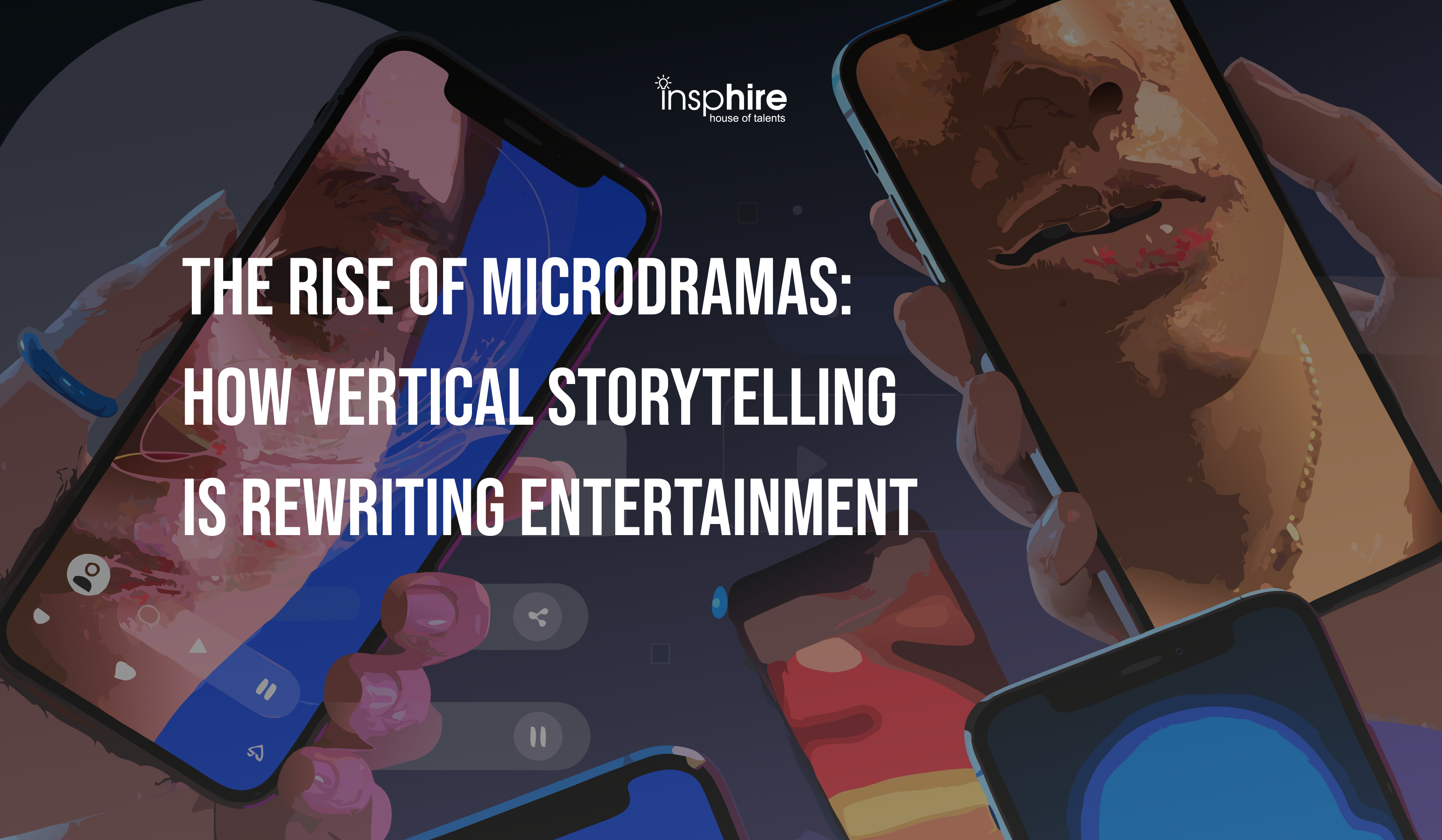

For decades, the “default” screen for storytelling was horizontal: the TV, the cinema, the laptop. But today, that frame is quietly being replaced by something much smaller, faster, and more personal: the smartphone held vertically. This shift has given rise to a new entertainment format – microdramas.
Microdramas are short, vertical serialized shows designed specifically for mobile viewing. Each episode usually lasts just 1-2 minutes. There are no long intros, no credits, and very little waiting. Every episode ends on a cliffhanger, and the next one starts instantly. It feels like binge-watching, but compressed into a fast, continuous scroll.
What once sounded like an experiment is now a fast-growing global industry.
In China, the format began scaling rapidly in the early 2020s, driven by platforms like DramaBox and ReelShort. These apps helped define what microdramas look like today: simple plots, emotionally charged stories, familiar characters, and high-frequency episode releases, sometimes reaching up to 100 episodes per season.
Since then, the format has gone global.
Four years ago, microdramas barely existed as an industry. Today, they are evolving into a projected $26 billion annual market by 2030, reshaping how serialized storytelling is produced, distributed, and consumed.
The Stats (No Fluff, Just Growth):
- The Attention Economy: In a historic shift, microdrama apps now generate more daily viewing time per user (35.7 minutes) than Netflix, Amazon Prime, or Disney+ (Omdia, 2026).
- Explosive Revenue: In-app revenue for micro-series is expected to more than double this year, jumping from $3.8 billion to $7.8 billion as the format goes global (Deloitte, 2026).
- A Massive Market: The total global micro-drama valuation has officially hit $14 billion in 2026, with the U.S. market alone accounting for $1.5 billion of that growth (Omdia, 2026).
This is a professional ecosystem that blends traditional TV craftsmanship with high-speed AI innovation.
For a candidate, this means one thing: Opportunity.
So why is this format growing so fast?
The answer is simple: it matches modern attention habits. Social media has already trained audiences to consume fragmented, fast, and highly visual content. Microdramas extend that behavior into storytelling. They require minimal time commitment but still deliver emotional payoff (tension, romance, drama, resolution) in a matter of minutes.
In other words, they fit into the gaps of modern life.
From a production perspective, microdramas also represent a major shift in how content is made. Unlike traditional Hollywood productions, which rely on long development cycles and high budgets, vertical dramas are cheaper and faster to produce. They can be tested, adjusted, and iterated based on real-time audience feedback. This makes the entire system more agile and responsive.
We’re also seeing early signs of mainstream adoption. Streaming platforms are paying attention, and Netflix has already begun experimenting with vertical video formats inside its mobile app: a clear signal that this is not just a niche trend, but a structural shift in content consumption.
What makes microdramas particularly interesting is not just their format, but what they represent: a broader move away from passive, long-form viewing toward highly optimized, mobile-first storytelling.
We may be entering a phase where “watching a series” no longer means sitting down for an hour, but instead, engaging in a continuous stream of 60-second emotional arcs throughout the day. If TV defined the 20th century and streaming defined the 2010s, then microdramas may define the next era of entertainment – one vertical screen at a time.
Spotlight: Our Client, RoseBerry Media
As a recruitment agency at the heart of this shift, we are proud to represent RoseBerry Media. Launched in early 2026, RoseBerry isn’t just entering the market; they are setting the “premium” benchmark for the entire industry.
With hubs in London, New York, and Tel Aviv, RoseBerry has already secured landmark deals with global giants like Banijay Rights, All3Media International, and Fremantle to “verticalize” legendary TV libraries using proprietary AI-powered workflows. They are proving that microdramas aren’t just “soap operas”, they are the new home for high-end, world-class intellectual property.
They are currently building an elite team to launch their premium DTC (Direct-to-Consumer) platform this summer.
Want to join the RoseBerry team?
We’re currently hiring across multiple roles as we build the future of vertical storytelling and microdrama entertainment.
Open positions:
- 🚀 Product Manager
- 📊 Business Analyst
- 📱 Social Media Manager
- 💰 Monetization Manager
- 🧠 Data Engineer
- 👨💻 Senior Full Stack Developer (Backend-oriented)
All roles are actively reviewing applicants.
If you’re excited about shaping a fast-growing global entertainment category and working at the intersection of content, tech, and mobile-first media, we’d love to hear from you.

InspHire is a 360° HR company taking a unique approach of specializing in building and improving HR processes and recruiting for global internet companies. Our approach and industry experience equipped us with deep knowledge and understanding in the world you work in. We cover every aspect of HR services that your company needs, from direct hire placements to trainings, employer branding, and welfare programs.